
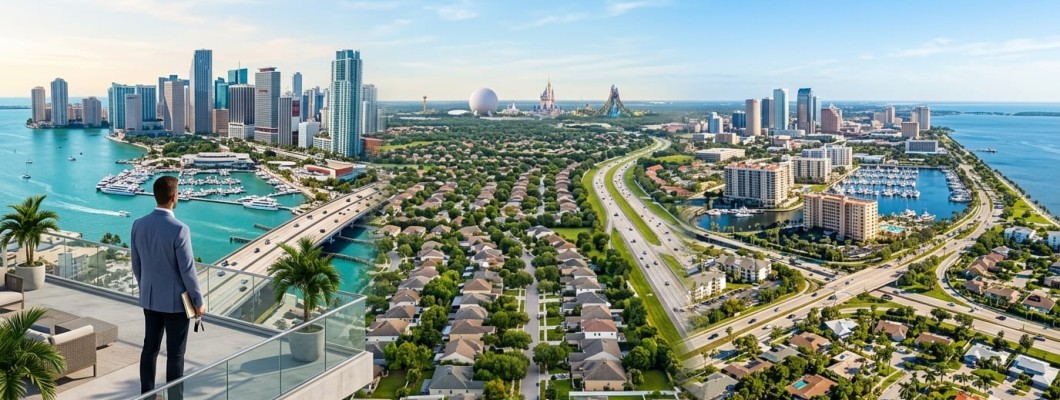
TL;DR; If you’re getting (or just got) your Florida real estate license, the “best” area is where strong demand, brokerage hiring, and your lifestyle all line up.
The best areas in Florida for new real estate agents are the metros and mid-size markets where population, job growth, and active brokerage recruiting create steady opportunities to work with buyers and sellers. These high-opportunity areas include Miami–Fort Lauderdale–West Palm Beach, Orlando, Tampa Bay, Jacksonville, Cape Coral–Fort Myers, Lakeland–Winter Haven, and other fast-growing corridors, but the right fit still depends on your budget, niche, and preferred lifestyle.
Key takeaways at a glance
- Growth hubs like Orlando, Tampa Bay, Miami–Fort Lauderdale, and Jacksonville attract heavy in‑migration and strong sales activity, which fuels brokerage hiring.
- Fast-growing mid-size markets such as Lakeland–Winter Haven, Cape Coral–Fort Myers, The Villages, Ocala, and parts of the Treasure Coast offer more affordability and often less saturation.
- Major brands and large independents, including Keller Williams, eXp, LoKation, LPT, Keyes, and Watson, actively recruit new agents in Florida’s fastest-growing metros.
- The best place to be a Florida agent varies by your cost of living needs, tolerance for competition, and whether you prefer luxury, first-time buyers, investors, 55+, or mixed business.
- Choosing your market is as important as choosing your brokerage because the right area puts you in front of more motivated buyers and sellers faster.
How should you define the “best” Florida market for new agents?
There is no official ranking of which Florida cities hire the most new real estate agents, so you have to look at several indicators together. Population growth, job growth, transaction volume, brokerage recruiting, and the quality of training and mentorship all matter more than a single headline statistic.
Recent Census data, Florida Realtors market reports, and industry rankings highlight a recurring group of Florida metros where these factors align in favor of new agents. Instead of memorizing lists, use these metrics to compare potential markets and focus on where your income goals, living costs, and lifestyle overlap.
| Metro / Area | What it’s known for | Why new agents look here |
|---|---|---|
| Miami–Fort Lauderdale–West Palm Beach | Luxury, international buyers, high-end condos | Huge volume, global visibility, many recruiting brokerages |
| Orlando–Kissimmee–Sanford | Theme parks, tourism, family suburbs | Top-tier population growth and strong training-focused offices |
| Tampa–St. Petersburg–Clearwater | Coastal lifestyle, urban + suburban mix | High demand, diverse niches, strong industry recognition |
| Jacksonville & Northeast Florida | Affordability, military, port and logistics | Growing yet less flashy market with room for new agents |
| Cape Coral–Fort Myers | Gulf Coast, 55+, canal and waterfront homes | Lifestyle-focused buyers and investors, smaller-market feel |
| Lakeland–Winter Haven & mid-size stars | I‑4 corridor commuters, high percentage growth | Lower costs and fewer agents per lead in many neighborhoods |
| Panhandle & North Florida | Military, government, regional employers | Relationship-driven, stable but quieter transaction volume |
What makes South Florida attractive for new real estate agents?
The Miami–Fort Lauderdale–West Palm Beach metro has been a top U.S. market for numeric population gain, driven by international buyers and higher-income households relocating from other states. This inflow, combined with consistently high transaction volume across both single-family homes and condos, creates a deep pool of potential clients in almost every niche.
As a new agent, you benefit from the sheer size and diversity of the South Florida market, where you can focus on condos, waterfront luxury, 55+ communities, international investors, or second homes. The tradeoff is intense competition, higher living costs, and more complex deals, which makes joining a strong team or mentorship-focused brokerage especially helpful in your first year.
Typical niches: urban and suburban condos, luxury and pre-construction, international buyers, second homes, and vacation properties.
How does Orlando’s real estate market support new agents?
Orlando–Kissimmee–Sanford has ranked among the top U.S. metros for numeric population gain, with tourism, healthcare, logistics, and tech all driving job growth. More jobs mean more households, and more households mean steady demand for rentals, starter homes, move-up properties, and investment real estate around the theme-park corridor and surrounding suburbs.
New agents often like Orlando because it offers a mix of “everyday” primary-residence business and strong demand for short‑term rental and vacation homes. The area also has a heavy presence of training-oriented brokerages and cloud-based firms, so you can usually find office-based coaching or virtual mentorship tailored to new Florida licensees.
Typical niches: first-time and move-up buyers, suburban new construction, short-term rentals, and 55+ communities in nearby counties.
Is Tampa Bay still a good place to begin a real estate career?
Tampa–St. Petersburg–Clearwater combines strong population growth with repeated mentions in national “markets to watch” reports, especially for investors and developers. The region offers urban condos, historic neighborhoods, waterfront homes, and suburban master-planned communities, which helps new agents experiment with several niches before choosing a focus.
Brokerages in Tampa Bay, including national franchises, 100%-commission models, and large independents, actively recruit newly licensed sales associates. You do face more competition than you would have a few years ago, but for many agents the balance of growth, lifestyle, and relative affordability still makes Tampa Bay one of the most appealing places to launch a Florida real estate career.
Typical niches: suburban first-time buyers, downtown condos, waterfront and beach homes, and long-term rental investors.
What should new agents know about Jacksonville and Northeast Florida?
Jacksonville’s growth is driven by a diversified economy that includes military, healthcare, logistics, finance, and port-related employment. Home prices and overall living costs tend to be lower than in South Florida, which makes it attractive to first‑time buyers and families relocating from more expensive coastal metros.
For new agents, Jacksonville offers a solid mix of urban, suburban, and coastal business without the same level of national spotlight you see in Miami or Tampa. The largest challenge is the metro’s wide footprint, which requires careful planning around commute times and coverage areas, but strong local brokerages and national franchises can help you find a sustainable farm area.
Typical niches: first-time and move‑up buyers, military and VA clients, master-planned communities, and beach or intracoastal homes.
How does Cape Coral–Fort Myers compare for lifestyle-focused real estate?
The Cape Coral–Fort Myers area has seen strong population gains driven by retirees, remote workers, and lifestyle buyers drawn to Gulf Coast living. Post‑storm rebuilding has created both short‑term disruption and longer‑term opportunity, as new construction, renovations, and updated building standards reshape parts of the local housing stock.
New agents in Southwest Florida can quickly specialize in 55+ communities, waterfront or canal homes, and second-home or seasonal residents who return each year. You’ll need to be comfortable learning about flood zones, insurance, and resilience, but in exchange you gain a client base that is motivated by lifestyle goals and long-range retirement plans.
Typical niches: 55+ living, waterfront and canal properties, master-planned communities, and seasonal or second-home buyers.
Are mid-size markets and smaller metros worth considering?
Fast-growing mid-size markets like Lakeland–Winter Haven, The Villages, Ocala, and parts of the Treasure Coast and Space Coast often rank among the nation’s leaders for percentage population growth. These areas offer more affordable housing and generally lower living costs than the big metros, which can give new agents more runway while they build a pipeline.
Because the agent population is smaller, your efforts in community involvement, local networking, and consistent marketing can stand out more quickly. The flip side is that transaction volume is lower overall, and some markets skew heavily toward specific niches such as 55+ communities, so you need to be comfortable focusing on those specialties if you choose them.
Typical niches: retirees and 55+ buyers, equestrian and rural properties, commuter corridors, and value-driven relocation clients.
| Market type | Pros for new agents | Potential drawbacks |
|---|---|---|
| Major metro (Miami, Orlando, Tampa) | High volume, many niches, strong recruiting | Higher living costs and more agent competition |
| Mid-size growth market | Lower costs, closer-knit community, less saturation | Smaller transaction pool and more specialized niches |
| Panhandle / North Florida | Stable local demand, relationship-driven business | Fewer high-end listings and lower media exposure |
Where are Florida brokerages actually hiring the most new agents?
When you scan job boards for “newly licensed real estate agent” roles and visit “careers” pages for large franchises and regional brands, the most intense recruiting clusters show up in Miami–Fort Lauderdale–West Palm Beach, Orlando, Tampa Bay, Jacksonville, Lakeland–Winter Haven, and Cape Coral–Fort Myers. These are the same areas where population growth and transaction volume have been strongest, so brokerages need new agents to capture demand.
Statewide recruiting powerhouses include cloud-based and 100%-commission models, training-centered franchises, and large independents with deep local roots. As a new agent, you should look not only at how many agents a company is onboarding, but also at the training structure, mentorship options, and how newer associates are actually performing after 6–12 months in your chosen market.
How can you choose the right Florida market for your goals?
Start by clarifying your priorities around cost of living, tolerance for competition, preferred niche, and lifestyle. If you want luxury towers, global buyers, and maximum upside, a big pond like Miami or Tampa may fit; if you prefer lower monthly expenses and strong community ties, a mid-size metro or Panhandle city might be a better match.
Next, match your niche to the metro by asking where your ideal client naturally lives and shops for property, then research which brokerages in that area offer structured training and potential team opportunities. Ground your decision in real numbers—population and job trends, closed sales counts, and local price ranges—so you are evaluating markets based on data rather than hype.
| Your priority | Best-fit Florida areas |
|---|---|
| Luxury and international clients | Miami Fort Lauderdale West Palm Beach |
| Theme-park rentals + families | Orlando Kissimmee Davenport |
| Balanced metro and “normal” buyers | Tampa Bay Jacksonville |
| Retirement and 55+ lifestyle | Cape Coral Fort Myers The Villages Ocala |
| Affordability and commuter corridors | Lakeland–Winter Haven Treasure Coast Panhandle |
How can OLT’s real estate courses support your chosen market?
No matter which Florida market you choose, you’ll need a solid education foundation to get licensed and stay compliant. OnLine Training’s DBPR-approved 63‑Hour Florida Sales Associate Pre‑Licensing Course is fully online, mobile-friendly, and instructor-led, so you can prepare for the state exam from anywhere in the state.
The pre‑licensing program covers all topics tested on the state exam, includes quizzes and a final exam inside the same online environment, and gives you up to six months of access with extension options. After you pass and launch your business, you can use OLT’s real estate catalog at oltraining.com/real-estate to find Florida post‑licensing and continuing education options that match your next career stage.
Ready to match your market to the right Florida real estate course?
Whether you plan to work luxury condos in Miami, family neighborhoods around Orlando, or affordable growth corridors like Lakeland–Winter Haven, starting with a strong education will make every market decision easier.
Frequently asked questions about Florida markets for new agents
There is no single best city for everyone; large metros like Orlando, Tampa, Miami, and Jacksonville offer the most volume and recruiting, while mid-size markets can provide lower costs and less competition if that fits your style better.
It usually works better to decide on a general market first and then interview several brokerages in that area, so you can compare training, mentorship, and support in the context of your local opportunities.
Your Florida sales associate license is statewide, so you can relocate or expand your service area as your life and the market change, provided you stay sponsored by a broker and meet your education requirements.
Look at agent counts, closed sales data, and typical days on market, then consider your savings, risk tolerance, and willingness to prospect; if high splits and limited training are paired with very high competition, another area may be a better starting point.
Your first step is to enroll in a state-approved 63‑hour pre‑licensing course like OLT’s online Sales Associate program, complete the course, and then schedule your state exam while you research markets and interview brokerages in parallel.